If Your Roof
Has Wet Insulation Under the Membrane
We will not lay a recover over soaked boards, because trapped water keeps rusting the deck.
Start WithTear-Off of the Wet Areas

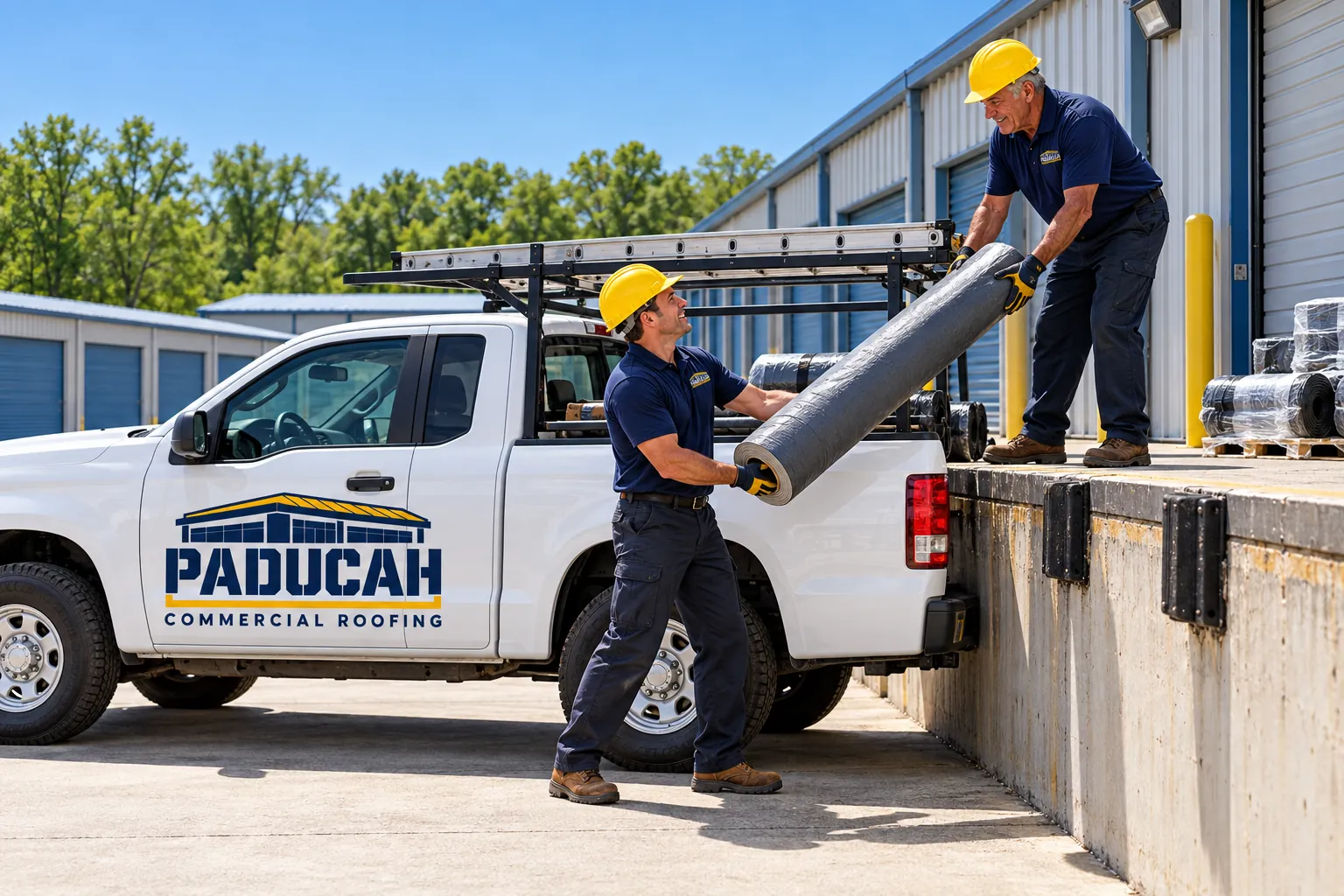
As a commercial roofing company in Paducah, we install, replace and repair roofs on commercial, industrial and agricultural buildings, starting every job on the roof itself.
Our commercial roofing company in Paducah works on one kind of property: commercial, industrial and agricultural buildings. Warehouses, plants, retail centers, offices, churches, schools, barns and equipment sheds carry roof details a house never has, from large rooftop units to long parapet walls.
Every job begins on the roof, with core cuts and moisture readings, before any system is chosen. That order keeps the call between repair, recover and replacement tied to what sits under the membrane.
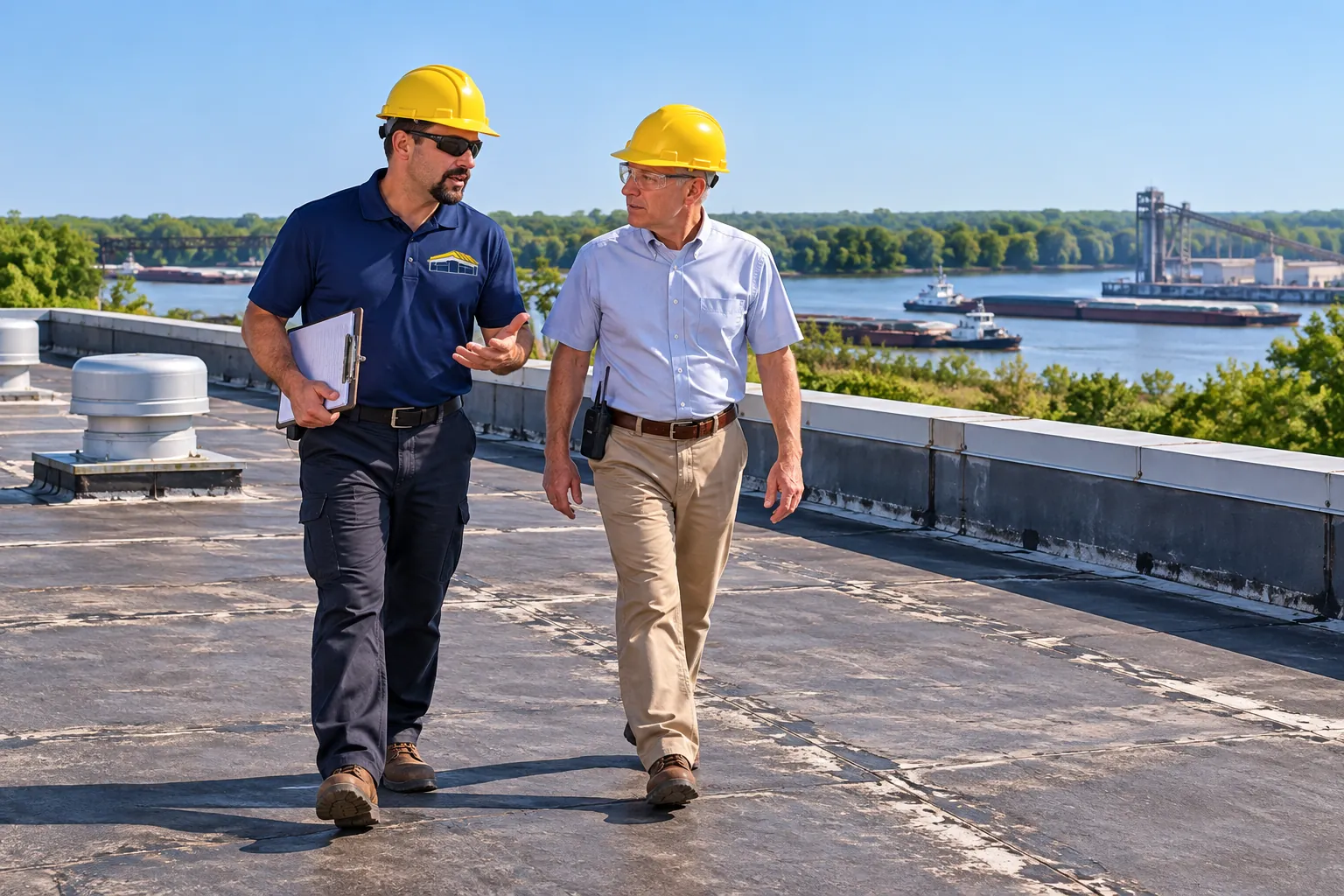
Call us to set up a roof walk with core cuts. You will see what each layer looks like before any system gets chosen.
Every roof walk records the same items, so the estimate rests on what the roof shows.
A few requests come up that would leave a roof worse off. Here is what we do instead.
We will not lay a recover over soaked boards, because trapped water keeps rusting the deck.
Residential roofs fall outside our commercial work.
Reusing old perimeter metal would tie a new roof to loose, rusted details.
The model code behind the Kentucky Building Code limits recovering over two existing layers.
Most buildings stay open while the roof is replaced. These details keep them running during the work.
Lift spots and material staging go away from entrances and loading docks, and the roof gets loaded in the order sections will be built.
Doors under an active roof edge get covered walkways, so staff and customers pass under protection while tear-off runs overhead.
HVAC units are disconnected and reset on a schedule set with building staff, one section of roof at a time.
Intakes near adhesive work get covered, and fully adhered sections are scheduled for times when those units can stay off.
On steel decks, tear-off debris can drop through the flutes, so stock and equipment below each work area get covered first.
Only the area that can be closed watertight by evening gets opened, and a temporary tie-off protects the edge of new work.
Questions about the buildings we roof, the code that applies, energy use and riverfront roofs.
Commercial, industrial and agricultural buildings: warehouses, plants, retail centers, offices, churches, schools, barns and equipment sheds. Houses and apartment roofs fall outside the work. Office and retail buildings tend toward TPO or EPDM behind a parapet, while farm buildings usually carry exposed-fastener metal panels with open eaves.
Kentucky's 2018 Building Code governs commercial roofs. The state's Department of Housing, Buildings and Construction describes it as the 2015 International Building Code with Kentucky amendments, and it applies to plans submitted on or after August 1, 2019. For roof insulation, the state's enforced code list names the 2012 International Energy Conservation Code.
It can in a heated or cooled building. A white TPO sheet or reflective metal finish absorbs less summer heat, and thicker insulation slows heat flow both ways; unheated warehouses see less difference. Ask the electric provider on your bill about commercial programs, since Jackson Purchase Energy, Kenergy and West Kentucky RECC each serve parts of the area.
Drainage sized for heavy runoff comes first, because the floodwall holds back the river while the roof depends on its own drains, scuppers and gutters. Older masonry buildings near the riverfront usually carry parapets, so a replacement adds new coping caps, counterflashing cut into the brick and through-wall scuppers. Damp mornings push adhesive work to drier afternoons.
Tell us about the building and the roof. We will set up a roof walk and a free estimate for the work it needs.
Want A Call About Your Roof?
Leave your name and number and we will call you back about the roof.
Or call now: (618) 386-4443